
 +40 (746) 44 97 97
 info@dainovaro.com

ARIS Flows – the evolution of APG into a full-fledged process management and automation platform
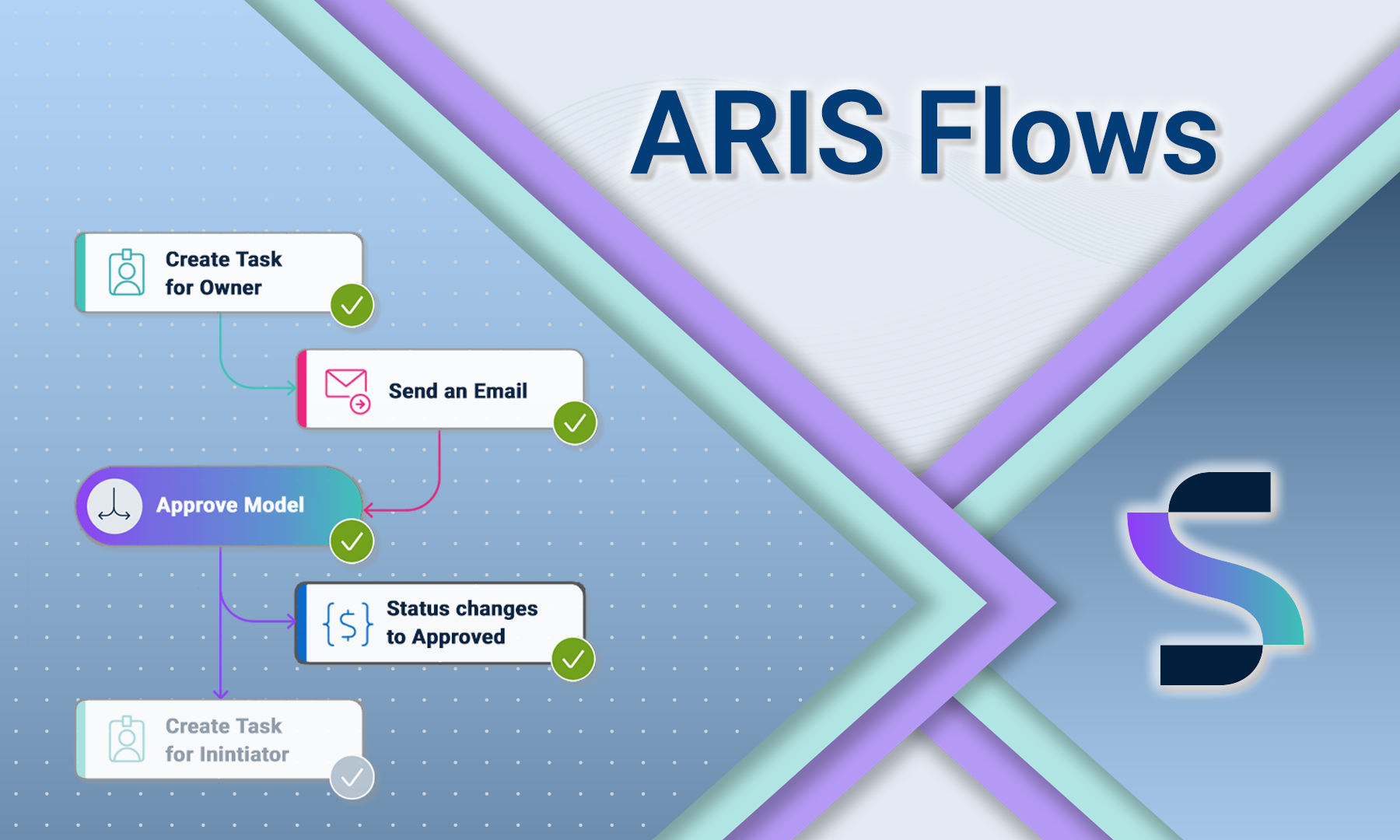
It expands the capabilities of the ARIS platform through built-in workflow automation and change management. As of October 27, 2025, this tool is available to ARIS Enterprise users in the cloud environment on version 10.0.2025.10, and it will also be available for on-premise installations, requiring a separate license.
From analysis to action
For modern organizations, it is no longer sufficient to simply model and analyze processes – real-time process management is essential. ARIS Flows combines process management, automation, and control in a single workspace. With its low-code/no-code environment, users without technical expertise can independently create and execute automation scenarios such as approvals, change management, model publication, and much more.
Smart automation and transparency
The module automates typical enterprise content governance tasks: from routing change requests to approving models and documents before publication. Support for the lifecycle Draft → Review → Approved → Published → Retired and the audit trails ensure transparency and audit compliance, reducing manual workload and the risk of inconsistencies.
Integration with external systems
ARIS Flows seamlessly connects with other enterprise applications, including Jira and ServiceNow, through API integrations. This enables synchronization of tasks and statuses across systems, triggering workflow actions directly from ARIS models, and ensuring data consistency between process management and operational execution.
A unified ecosystem for process improvement
When combined with ARIS Process Mining, the new module turns insights into action: detected deviations, delays, or bottlenecks can automatically launch the required workflows for notifications, approvals, or corrective measures.
It is important to note that ARIS Flows is an evolution of the former APG (ARIS Process Governance) module. All familiar functions for approvals, validations, and audit remain in place, complemented by integration with external systems, flexible configuration options, and analytics capabilities making the platform a comprehensive solution for workflow automation and governance.
